BILLY LOVES
WILLIE.
Three words on a billboard in Billy Graham country, beside a picture of Willie Nelson singing with a joint in his hand. We mean it.
BILLY LOVES WILLIE ISN'T A PUNCHLINE.
IT'S A POSSIBILITY.
That is the whole board. Three words and one URL — no product shot, no slogan, no sponsor logos. We took them off on purpose so nothing explains it away. The sponsors live on this site, not on the highway.
Not funded, directed or authorized by Billy Graham's family or ministries, or by Willie Nelson. No permission was asked. Craig Rose is a fan of both — and Franklin Graham is invited to come talk, listen and share his lens on any of the forty days.
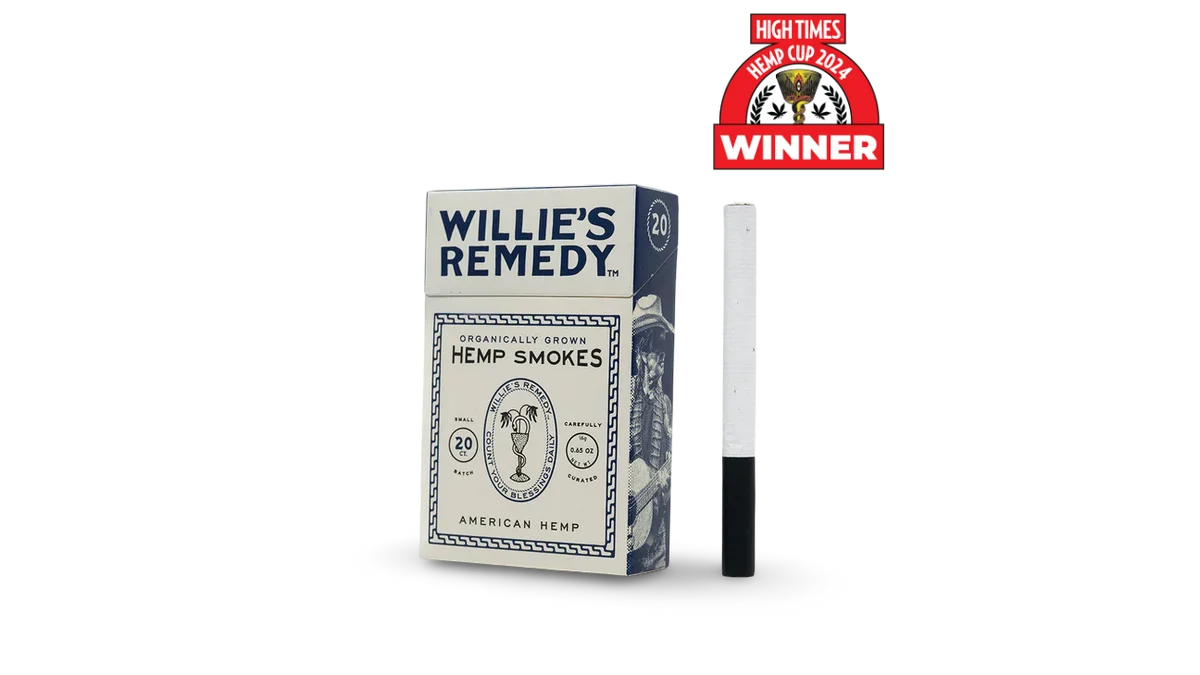
We mean the man, the songs, and what he is smoking while he sings them. Willie's Remedy hemp is already sold all over this town — legally, today. On December 11 that ends. Which is why the billboard exists at all: this is a campaign to save hemp.
NO AFFILIATION.
NO SURPRISES.
This campaign has no affiliation with the Billy Graham Evangelistic Association, the Graham family, or any of their ministries. None. Not a partnership, not a license, not a wink.
The only connection is a through-line in one man's life: Asheville, a tent, a press desk, and a word that has been used to reach the people the church wrote off. We didn't say Billy Graham. We said Billy. And we said Willie. Two first names on a board beside a highway — and yes, we mean the man, the songs, and what he is smoking while he sings them.
Nobody funded this and nobody directed it. Not Billy Graham's people, not Willie Nelson's. No permission was asked for any of it, and none was given. Craig Rose is simply a fan of both men, paying for a billboard with his own name attached.
If Franklin Graham comes after us, we won't be surprised — and we've printed his objections on this same site rather than hide them. But the invitation is real and it stands: Franklin, we would welcome a conversation, and you are invited to come participate, listen, learn and share your lens on any of the forty days. There is nothing here to shut down. No mark is used. No endorsement is claimed. No logo, no crusade name. What's left is a conversation, and a conversation is not a trademark.
On the imagery: the board art shown on this site is a mockup. The live media buy runs a real, licensed Willie Nelson photograph with the likeness cleared in writing before a single play. We are not letting this become a cease-and-desist story or a false-endorsement story. Willie is not a sponsor, partner or endorser of this campaign.
We also do not call Canton a hometown. Billy Graham was raised near Charlotte and chose to live in Montreat, up the road from here. This is Billy Graham country — that's the accurate claim, and it's the only one we make.
We're stating it plainly here because the people we're showing this to — Larry Ross, Papa Roach, venues, sponsors, press — deserve to know exactly what they're standing next to before they say yes. This one lives on the edge. That's the point. Read the why and the edge starts to look like a door.
Twenty years ago the same approach ran through the biggest newsrooms in America. It offended people on Monday and changed the conversation by Friday — and it was always love that was doing the offending.
National coverage of a campaign the church called offensive — until it read the second sentence.
Read the coverage ↗2006. Same playbook: a headline nobody could ignore, wrapped around the word love.
Read the coverage ↗Pulled from a Christian convention floor. Then covered on the nightly news.
Read the coverage ↗Everything on this site is on the record. Ask us anything before you sign anything.
WHY BILLY?
I am not going after Billy Graham. I followed Billy Graham.
I believed what Billy believed: that truth can change a heart, that love can reach people an argument cannot, and that nobody is beyond transformation.
I followed him so closely that I practiced the Billy Graham Rule. When I traveled, I asked for two airline tickets, because Billy would not travel alone with a woman who was not his wife.
Billy helped shape how I understood evangelism.
I have seen things Billy never had the opportunity to see.
I have sat with hemp farmers, scientists, veterans, parents, pastors, artists, business owners and people who never considered themselves cannabis consumers.
I have watched a plant become a drink in a restaurant, a tool for reflection, a source of income for a farmer, a different choice for an adult, and a doorway into conversations the church has avoided for generations.
I believe that if Billy were here — and if I could sit with him and introduce him to these people — I could convince him to look again.
Maybe Billy would not consume cannabis. That is not the point. I believe he would listen.
I believe he would recognize that fear, stigma and incomplete information should not determine how we treat people or write laws.
If Billy Graham had spoken up, millions of people who trusted him might have given themselves permission to reconsider what they had been taught.
Those people are still here. They vote. They attend churches. They own farms and businesses. They raise families. They call senators. They shape what America believes is moral.
If they understand what is actually happening — and speak — this does not remain a cannabis-industry problem. It becomes a moral conversation about truth, stewardship, freedom, compassion, agriculture and the people affected when government changes the rules.
Can the pulpit and the plant sit at the same table?
Can Billy's America listen to Willie's America?
Can faith become curious before government becomes punitive?
IT IS A CRUSADE TO MAKE AMERICA LOOK AGAIN.
The conversion we are asking for is not from Christianity to cannabis.
I LOVE YOU.
Because Craig believes hemp can help change the world. The government can change a definition. The plant will continue to grow. The question is whether we will.
I GOT MY START
BECAUSE OF BILLY.
NOW I'M WRITING HIS PEOPLE A PERMISSION SLIP.
Billy Graham brought a crusade to my town, and DC Talk played it. I was a kid in that building watching a man fill an arena by refusing to yell at anybody. I walked out wanting to do what Billy did. That is the actual origin of everything that came after — the booth, the Bible cover, the shirts, all of it.
I did what Billy did, in the rooms Billy never went into. Porn conventions. Cable news. Rooms full of people the church had already written off. Same sentence every time. The New York Times covered it three times. The church covered it with lawyers.
I get to Sedona — the far end of woo — and the people there say: go to the sister city. Asheville. And Asheville turned out to be more woo-woo than Billy ever was, in the town with Billy's name on the expressway, the training center, the parkway and the Cove.
So here is what I am actually doing with forty days. I am handing every follower of Billy Graham a giant permission slip to get behind this plant — and behind the people who grow it, sell it, sing about it and smoke it. Stop being afraid of it. That's the whole build, and it is a campaign to save hemp.
HE DISAGREED WITH,
YOU CAN LOVE A FARMER WHO GROWS A PLANT.
THE CHURCH HAS BEEN
MAD AT CRAIG ROSE
FOR TWENTY-FOUR YEARS.
Plenty of people of faith will find this campaign hard to take. That is fair, and it is familiar — the same was true of the booth at the porn convention, which ended up in the New York Times three times. This is not a stranger wandering into faith culture with a bag of weed. This is a man who spent his entire adult life inside evangelicalism, taking the hits, saying the same sentence: start with I love you.
Profiled three separate times over two decades — not as a curiosity, as the guy who kept showing up in rooms the church would not enter.
A booth at the porn convention, a Bible cover publishers refused to print, and a national argument about whether loving someone means approving of them.
Two decades of being handed a microphone by people hoping he'd flame out, and handing it back with the same six words.
Twelve minutes from the Cove, three companies pledging ten percent to a nonprofit, and forty nights booked.
You do not get to be this controversial for this long unless somebody keeps deciding you were telling the truth.
Craig Rose is the connector — the instigator who recognizes a pattern, follows the synchronicity, and assembles the people. Camp Mary at Shope Creek. The Hollow Bone Initiative. The Deer Trail. Artists who arrived as retreaters and left under their own names. It is the same instinct as the booth at the convention, pointed at a plant instead of an industry.
The full thirty-year record · Craig GrossFORTY DAYS ISN'T A GIMMICK.
IT IS HIS UNIT OF TIME.
He once tried not eating for forty days and wrote a book about it. He ran forty nights on Abbot Kinney. He is currently championing forty days of rest — using the exact products that go illegal on December 11. Forty is not a marketing number here. It is a track record.
The book with J.R. Mahon, built on the forty days Jesus spent in the desert eating nothing. The argument was that religious consumerism and church talk were starving the actual message. Less talking. Get out of the pew. Forty days of nothing, on purpose.
ASCENSION — a temporary cultural space on Abbot Kinney that ran forty nights of music, artists, light, sound, cannabis, spirituality and conversation in the same room. Not a store. A room with a clock on it.
The rest ritual he is championing right now — and the exact category of product the December 11 rule change makes illegal. Forty days of practice, ending on the day the law says stop.
spiritualplants.com/pages/rest →The latest forty. Same unit of time, same reason for picking it, pointed at a plant and a deadline instead of a fast and a stage. He has done this three times already. This is the fourth.
NOW HE IS SPENDING FORTY DAYS ON A PLANT THAT HELPS PEOPLE SLEEP.
LOVES ISN'T
THE SAME AS ENDORSES.
This is not a new trick. It is the same four-word sentence that has been landing for twenty-four years — name a person the church wrote off, put the word loves in front of them, and let everyone else supply the outrage.
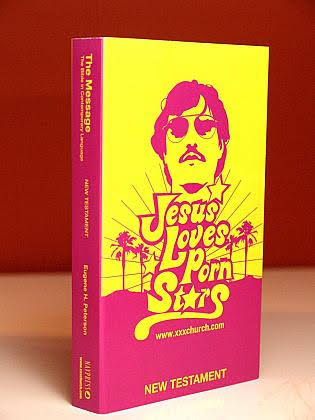
A pastor takes a booth at the porn convention with a Bible that says Jesus Loves Porn Stars on the cover. Publishers refuse to print it. The industry laughs. Everyone reads it anyway — because it says loves, not approves.
Named a person, not a category. Sat next to him on stages for years. People got hung up on the sentence and missed that it was the most literal thing in the New Testament.
The book, written with Jason Harper, published by Baker. Same argument in a hardcover: love is not an endorsement, it's the starting position.
Same sentence structure. Same mountains the most branded man of faith in American history chose to live in. Same disrupter now living twelve minutes from the Cove. The plant is not the subject. The person is.
BIG TYPE.
NO SMALL PRINT NOBODY READS.
Hand-lettered energy, one sentence per board, readable at fifty-five miles an hour. Same voice as a Post It Pat canvas: loud, plain, a little funny, impossible to argue with.
Willie singing, mid-smoke. No product. Sponsor line small at the bottom.
The footnote board, for the people already mad at the first one.
One date. One plant. One law that changed its mind.
The whole campaign in four words, no product in frame.
Countdown board that changes number every week.
Simple facts, big type, source printed small.
Hand-painted, re-painted, parked wherever people are.
Concept placements. Nothing is booked, and every board runs with the Willie's and Start With I Love You brand owners' blessing or it doesn't run.
IT DID NOT START
IN ASHEVILLE.
IT STARTED IN CANTON.
The first board is up — as of today — twenty miles west of the city, on the only digital billboard in Haywood County — directly in the heart of Canton, across from the Post Office near Main Street, where traffic crawls and people have time to read something twice. Paper mill town. Flood town. Not a market you buy for reach. A market you buy because the first clue should land somewhere honest.


The first play says nothing about hemp, nothing about a bill, nothing about a venue. Six seconds, no explanation, no logo doing the heavy lifting. The campaign expands from here into Asheville and out across Western North Carolina — but Canton gets it first, and for two weeks it is the only place on earth where anyone has seen it.
THE BILLBOARD
ASKS THE QUESTION.
THE WEBSITE ANSWERS IT.
Never cram Asheville, Halloween and December 11 onto the first board. That explains the trick before anybody has leaned in. The boards get one line at a time.
Nothing else. No leaf. No sponsors. No explanation. Let it sit unexplained for at least 72 hours before a single word goes to press.
The Fireproof question, back on a board twenty-four years later. Same four words that were on the shirts.
Now the number lands, in the town where forty days means something specific to everybody who reads it.
September makes Western North Carolina curious. October tells them where to show up.
One night, one creative, one city named out loud for the first time.
Only the day number changes. Thirty-nine more creative swaps, all negotiated up front with proof-of-play.
America legalized it.
We built an industry around it.
Now the rules are changing.
Asheville is starting a forty-day conversation about what happens next.
- 01Let the first board exist unexplained for 72 hours before anything goes to press.
- 02Ask residents to record six-second answers to: What do you believe?
- 03Matching clue cards, coasters and window signs around Canton and Asheville.
- 04Call it a 40-Day Love Crusade — more distinctive and more welcoming than a crusade.
- 05Hold THE RULES CAN CHANGE. THE PLANT WILL KEEP GROWING. for late in the countdown.
- 06Lock the scheduled creative changes and proof-of-play with the billboard company now.
NOT A MINISTRY.
A NONPROFIT AND THE PLANT COMPANIES WHO SPONSOR IT.
This is the first thing worth being clear about. Nobody is passing a plate. There is no church behind this and no ministry raising money off a plant. There is a nonprofit, a set of donations Craig raised the way he has raised money for twenty-four years, and cannabis brands sponsoring the billboards and the nights.
INITIATIVE
A nonprofit in formation building its first permanent sanctuary outside Asheville, born out of 131 acres at Shope Creek. It helps sponsor the forty days and it is the home for the donations Craig raised for this. Not a church. Not a ministry. A place where healing doesn't start with what you can afford.
Plant companies with something real to lose on December 11, buying the boards and the nights. Their names run small along the bottom of every billboard, which is exactly what makes the sentence above them controversial.
Elkhorn Canna Co. is a proposed sponsor and host for some of the experiences across the forty days.
These are proposed sponsors and ideas — sponsorship conversations are open. Nothing here is a donation solicitation on behalf of any brand, and no sponsor controls the programming.
FOUR SUBJECTS.
NO SPIN ON ANY OF THEM.
- 01Hemp and marijuana are the same plant. The only legal difference is how much THC is in it.
- 02The 2018 Farm Bill legalized hemp with no more than 0.3% delta-9 THC by dry weight. That one number created an entire legal industry.
- 03The change taking effect December 11, 2026 rewrites that limit, and products sold legally today become illegal on that date.
- 04This is not a court ruling and not a police decision. It is a line in a spending bill.
- 01Federal law, North Carolina law and Texas law currently say three different things about the same product.
- 02Nobody's product got more dangerous. The definition moved.
- 03Farmers, retailers and manufacturers who followed every rule are the ones who lose inventory.
- 04Knowing the date is not the same as breaking the law. Ask questions before it costs you something.
- 01We are not here to protest anybody. We are here to have the conversation in public.
- 02Start with I love you. Then disagree as much as you want.
- 03Everyone in this argument has somebody who uses this plant to sleep, eat or keep going.
- 04You can hold a belief and still hold the door open.
- 01Billy Graham filled rooms in this town by inviting people who did not agree with him yet.
- 02Willie Nelson wrote gospel records and smoked weed. Both are true.
- 03Plants show up in almost every faith tradition's ritual. That is not an argument, it is history.
- 04Forty days is a biblical unit of time. We picked it on purpose.
THE MOST BRANDED MAN
OF FAITH IN AMERICA.
AND THE WILDEST DISRUPTER OF IT JUST MOVED TO HIS TOWN.
That is the campaign. Not a slogan about weed — a collision between two names this country already has strong feelings about, happening on the same expressway.
Billy Graham is Asheville. His name is on the expressway, the training center, the parkway, the Cove. He was also the outlier of his own generation — integrating his crusades when it cost him money, going on television when the church called it vulgar, standing beside presidents and prisoners in the same week. He did not win people by agreeing with them. He filled rooms with people who hadn't decided yet.
Craig Rose — the name every Christian in America knows as Craig Gross — is the outlier of this generation. The pastor who took a booth at the porn convention, put Jesus Loves Porn Stars on a Bible cover, named actual human beings instead of categories, and has said the same five words the entire time: start with I love you. Now he lives here.
So we mean it exactly how it reads. Billy loved the people the world had written off, and Willie Nelson is the most beloved written-off man in America — the man, what he sings, and what he is smoking while he sings it. That is Craig's read on Billy, and it is the whole argument for saving this plant.
This is a campaign to save hemp, run with the playbook of the biggest evangelist who ever lived. Argue with it for forty days.
LARRY ROSS RUNS
THE PRESS ON THIS
A. Larry Ross Communications has handled the press for Billy Graham for decades. They also handled Craig's press — through Jesus Loves Porn Stars, through the Bibles, through every campaign that made people angry before it made people think.
We need them because this campaign walks a line on purpose. BILLY LOVES WILLIE borrows the cadence of an American revival. It does not borrow the endorsement. Larry Ross is the one firm on earth that can say both of those things in the same sentence and be believed.
- 1. The Billy Graham Evangelistic Association is not involved in, consulted on, or endorsing this campaign. No affiliation is claimed or implied.
- 2. Billy Graham is not a sponsor, partner, or participant. He is a reference point in a conversation about how the church talks to people it disagrees with.
- 3. Franklin Graham is not a target. He is an invited guest.

HE HAS ALREADY SAID NO. WE READ IT. WE'RE STILL ASKING HIM OVER.
Franklin Graham has spoken firmly against cannabis and against legalization — personally and theologically — while acknowledging he tried marijuana once as a young man. His arguments are not a mystery to us, so we are printing them here instead of pretending they don't exist:
He rejects the idea that a plant is acceptable simply because God created it. God made tobacco too, he says. Creation is not permission.
He holds that no drug is harmless, and that cannabis carries real risk of dependency and psychological harm.
He warns that regular use pulls people into "a pit of destruction and despair" and away from their faith — often citing anti-drug research on the brain.
His father opposed marijuana too, on the same spiritual grounds. So this is not a family we ambushed — it's a family whose position we know by heart. And the whole point of forty days in Asheville is that a person can be completely against what you do and still be worth sitting with.
Franklin — no lawyers, no cameras, no press release. One chair, one hour, and yes, I'll be smoking.
A cease and desist is a paragraph. A conversation is a chapter. We would rather have the chapter.
ONE PLANT.
FORTY NIGHTS.
Asheville is Billy Graham country. The expressway carries his name. So does the training center road that runs up to The Cove. Willie Nelson's name is on shelves all over the same town.
On December 11, the federal rules around this plant change. So we are holding forty days and forty nights in the middle of Billy Graham country, leading with love, and ending on the day the clock runs out — December 11 at The Orange Peel.
That is the whole idea. Two names this country already has feelings about, one plant, one deadline, and forty nights of people who do not agree yet sitting in the same room.
DECEMBER 11 · THE ORANGE PEEL.
A final night in Asheville on the exact day the federal definition changes, with an acoustic program built around the artists who have carried these rooms. Proceeds benefit the Hollow Bone Initiative. Artists, venues, brands and volunteers who want to be part of it are welcome to reach out — the lineup and the programming are still being built in public.
WILLIE.
Sponsor Interest
WANT YOUR BRAND IN THE ROOM?
Drop your details and we'll be in touch with tiers, dates, and what a partnership looks like.