645
THE PLANT DOOR
645 · FRANNY'S FARMACY
Franny Tacy was the first woman to grow hemp under North Carolina's modern pilot program. The Haywood store advertises an outdoor smoking patio for pop-ups, performances and community gatherings.
Chapter 01 of 06
Federal, North Carolina, Texas — three rulebooks, one plant
What Congress actually did, what is only proposed, and what consumers, workers and businesses need to understand right now.
Time remaining
A hemp dispensary and outdoor patio at 645 Haywood. A vinyl listening bar at 647. The cultural headquarters was hiding in plain sight.
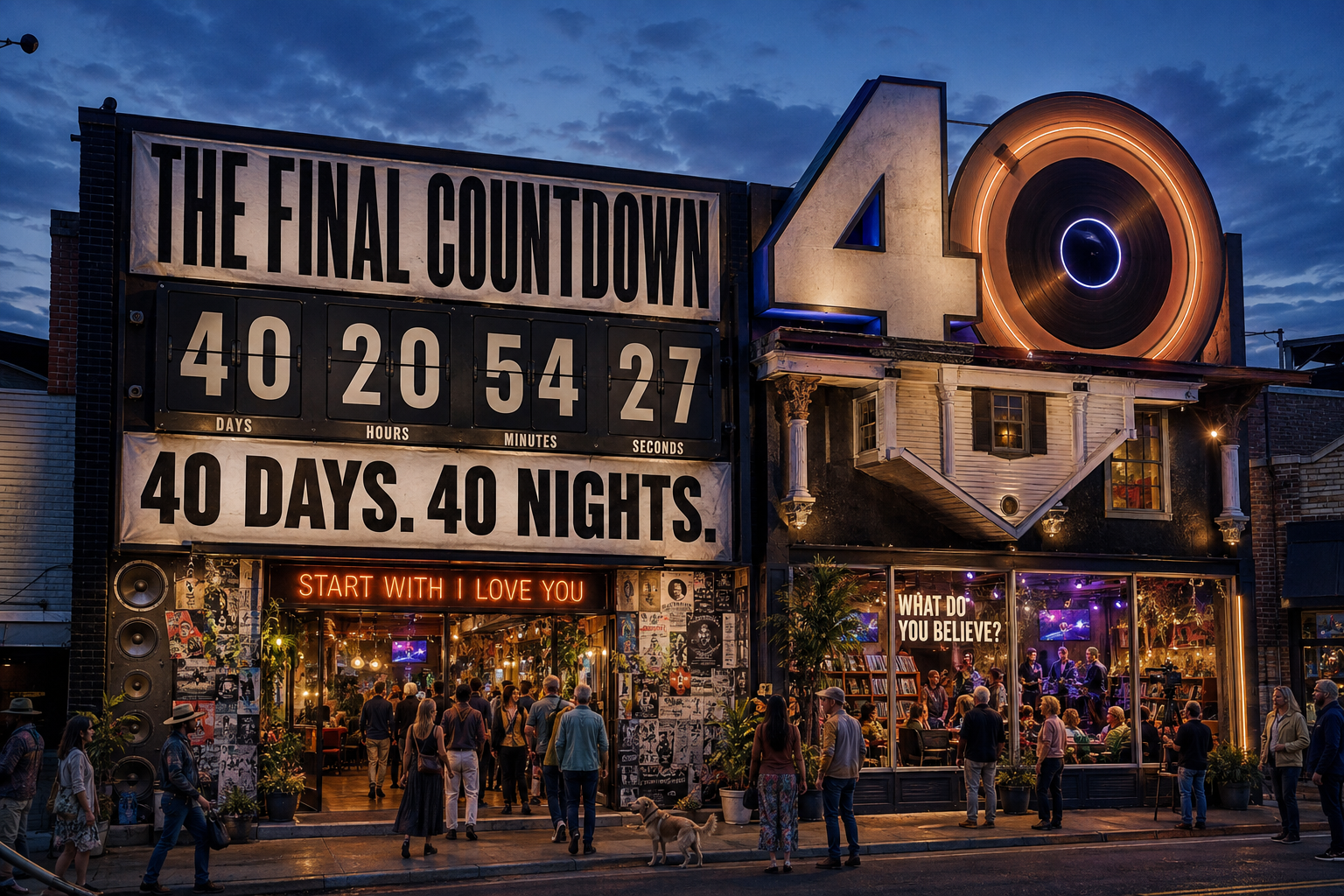
Franny Tacy was the first woman to grow hemp under North Carolina's modern pilot program. The Haywood store advertises an outdoor smoking patio for pop-ups, performances and community gatherings.
Directly next door: a dessert-and-wine listening bar with hi-fi vinyl, DJs and bring-your-own-vinyl nights. Records on one side. Hemp on the other.
Visible from the street and usable as a live television shot.
One new question in the glass every morning.
Every visitor can become part of the documentary.
Education becomes one clear, real civic action.
The doors stay open. The record keeps spinning. Every day produces one question, one witness, one fact, one song and one action.
Current policy in plain English. Federal and state never blurred. Every claim dated and sourced.
Kenny, guest artists, new releases, listening sessions, comedy and film. Music is the transmission system.
One fireproof 40-minute conversation every night. Disagreement is invited; humiliation is not.
Forty seconds. One answer. One city. Every visitor can enter the national story.
Forty seats around one real question—farmers, parents, lawyers, workers, artists and people who oppose us.
The existing outdoor patio, subject to law, permission, responsible hosting, transportation and weather.
Dogs, adoption, veterinarians and safe-storage education. No THC exposure to animals. No universal pet-health claims.
Cannabis opens the door to conversations about psychedelics, mushrooms, medicine, freedom and consciousness—education only.
Not every night needs a giant concert. Every night needs a room, a question, a human stake and a reason to come back tomorrow.
The Track Record
We've been opening temporary spaces for years, and we did it on the streets that decide what's next — Abbot Kinney in Venice, twice, then a gallery in Carmel-by-the-Sea. Not test markets. Rooms where the culture shows up or it doesn't. It did. Asheville is next.
We opened on Abbot Kinney — the weirdest and arguably most influential street in America, where brands go to find out whether culture actually wants them. Ascension wasn't a store. It was an immersive installation about spiritual experience, built with artists instead of agencies.
Then we did it again on the same street. A walk-through funhouse instead of a retail floor — rooms, art, music, and a neighborhood crowd that came back night after night without being paid to.
From one city of influence to another. Carmel does not hand out gallery space, and we got one: Phygital art, the Take Me To The Light room, art walks at 4:20, light and sound used as therapy.
The biggest one yet — and the first with a clock on the front of it.
Why Forty
Forty days of rain.
Forty years in the wilderness.
Forty days in the desert.
Forty days of our own rituals.
Forty is the number scripture uses for the time between the old world and the new one — the wandering, the fasting, the flood. It's also the length of the Spiritual Plants ritual: forty days of showing up daily until something in you changes. The government supplied a deadline. We chose forty days to face it in public.